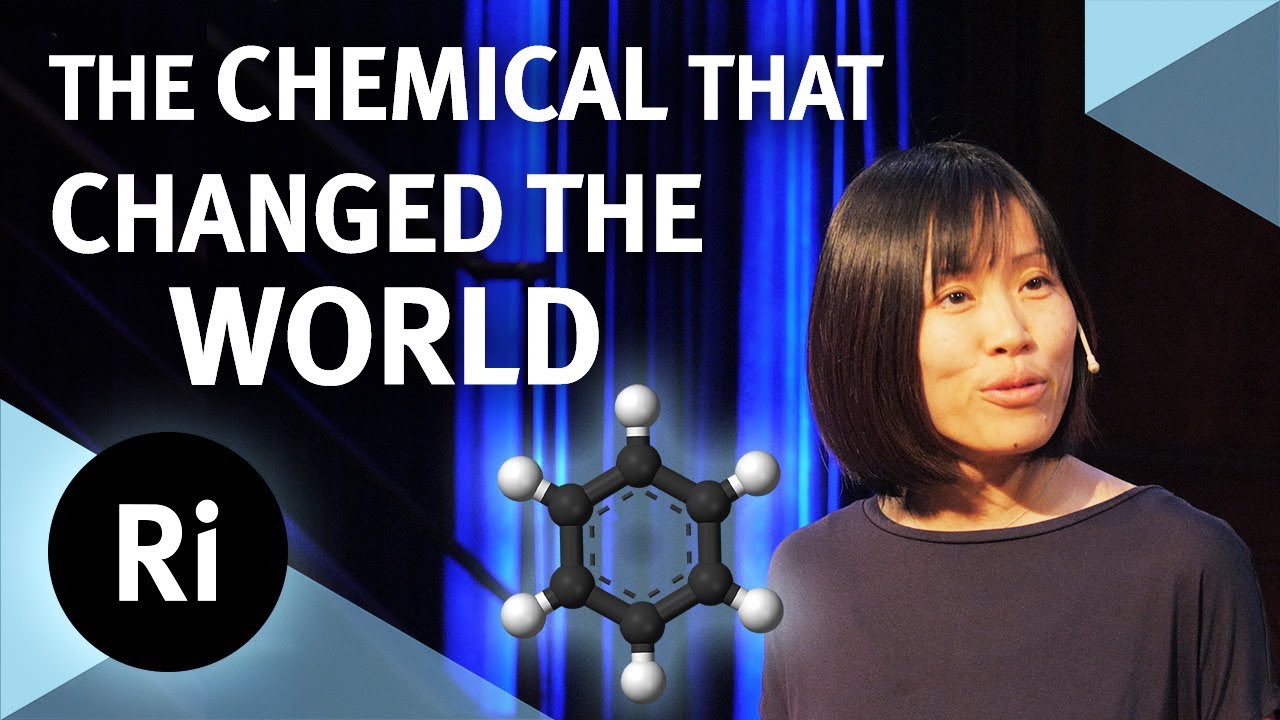
How benzene changed chemistry forever - with Judy Wu
The most useful chemical you've never heard of? Explore the ongoing significance of a chemical compound first isolated at the Ri 200 years ago: benzene.
Join this channel to get access to perks:
https://www.youtube.com/channel/UCYeF244yNGuFefuFKqxIAXw/join
Watch the Q&A here (exclusively for Science Supporters): https://youtu.be/9_lJRwHU_-s
This Discourse was recorded at the Ri on 4 July 2025.
Benzene has played a significant role in modern science and industry since it was first isolated by Michael Faraday in 1825 - originally from whale oil as a by-product of gas production - here at the Royal Institution.
In this Discourse, Judy Wu explorex the discoveries, challenges, and unexpected revelations encountered by chemists who devoted their work to unravelling the mysteries of benzene and its significance.
Throughout the late 19th and early 20th centuries, various chemists presented different models to account for the structure and the extraordinary chemical stability of benzene.
The first part of this talk covers a brief history of Michael Faraday's amazing story and humble beginnings. It also talks about his discovery of benzene, and then how chemists came to understand the structure and reactivity of benzene. The second part addresses the evolution of the definition of aromaticity and the modern research it underpines today.
The term aromaticity, originally linked to the distinctive smell and chemical structure of benzene, has evolved significantly to include many molecules that are not “benzene-like” at all. Judy talks about discoveries that reshaped chemists' understanding of the concept of aromaticity and how this concept is now applied in practical fields of chemistry and technology.
00:00 Introduction
1:16 Michael Faraday’s humble beginnings and journey into science
14:29 How gas lighting led to Faraday's discovery of benzene
18:38 How benzene created purple dyes and petroleum
26:28 The birth of structural chemistry
30:58 How scientific representations guide our thinking
35:42 What makes benzene so special chemically?
39:57 Modern research using aromaticity - DNA mutations
42:27 How Kathleen Lonsdale proved the structure of Benzene
47:53 Why kind supporters are vital for scientific discovery
---
Judy Wu is an Associate Professor at the University of Houston, where she leads a research team investigating the concept of aromaticity and its modern applications in developing technologies, such as organic electronics and energy storage. With a background in computational quantum chemistry, she has 20 years of experience in research on the topic of aromaticity and antiaromaticity.
---
The Ri is on Twitter: http://twitter.com/ri_science
and Facebook: http://www.facebook.com/royalinstitution
and TikTok: https://www.tiktok.com/@ri_science
Listen to the Ri podcast: https://podcasters.spotify.com/pod/show/ri-science-podcast
Donate to the RI and help us bring you more lectures: https://www.rigb.org/support-us/donate-ri
Our editorial policy: https://www.rigb.org/editing-ri-talks-and-moderating-comments
Subscribe for the latest science videos: http://bit.ly/RiNewsletter
Product links on this page may be affiliate links which means it won't cost you any extra but we may earn a small commission if you decide to purchase through the link.
Join this channel to get access to perks:
https://www.youtube.com/channel/UCYeF244yNGuFefuFKqxIAXw/join
Watch the Q&A here (exclusively for Science Supporters): https://youtu.be/9_lJRwHU_-s
This Discourse was recorded at the Ri on 4 July 2025.
Benzene has played a significant role in modern science and industry since it was first isolated by Michael Faraday in 1825 - originally from whale oil as a by-product of gas production - here at the Royal Institution.
In this Discourse, Judy Wu explorex the discoveries, challenges, and unexpected revelations encountered by chemists who devoted their work to unravelling the mysteries of benzene and its significance.
Throughout the late 19th and early 20th centuries, various chemists presented different models to account for the structure and the extraordinary chemical stability of benzene.
The first part of this talk covers a brief history of Michael Faraday's amazing story and humble beginnings. It also talks about his discovery of benzene, and then how chemists came to understand the structure and reactivity of benzene. The second part addresses the evolution of the definition of aromaticity and the modern research it underpines today.
The term aromaticity, originally linked to the distinctive smell and chemical structure of benzene, has evolved significantly to include many molecules that are not “benzene-like” at all. Judy talks about discoveries that reshaped chemists' understanding of the concept of aromaticity and how this concept is now applied in practical fields of chemistry and technology.
00:00 Introduction
1:16 Michael Faraday’s humble beginnings and journey into science
14:29 How gas lighting led to Faraday's discovery of benzene
18:38 How benzene created purple dyes and petroleum
26:28 The birth of structural chemistry
30:58 How scientific representations guide our thinking
35:42 What makes benzene so special chemically?
39:57 Modern research using aromaticity - DNA mutations
42:27 How Kathleen Lonsdale proved the structure of Benzene
47:53 Why kind supporters are vital for scientific discovery
---
Judy Wu is an Associate Professor at the University of Houston, where she leads a research team investigating the concept of aromaticity and its modern applications in developing technologies, such as organic electronics and energy storage. With a background in computational quantum chemistry, she has 20 years of experience in research on the topic of aromaticity and antiaromaticity.
---
The Ri is on Twitter: http://twitter.com/ri_science
and Facebook: http://www.facebook.com/royalinstitution
and TikTok: https://www.tiktok.com/@ri_science
Listen to the Ri podcast: https://podcasters.spotify.com/pod/show/ri-science-podcast
Donate to the RI and help us bring you more lectures: https://www.rigb.org/support-us/donate-ri
Our editorial policy: https://www.rigb.org/editing-ri-talks-and-moderating-comments
Subscribe for the latest science videos: http://bit.ly/RiNewsletter
Product links on this page may be affiliate links which means it won't cost you any extra but we may earn a small commission if you decide to purchase through the link.

The Royal Institution
Videos to make you think more deeply about science. Explosive short films, full length talks from the world’s leading scientists and writers, and videos to challenge the way you look at the world.
The Royal Institution is a 200 year old independent chari...
Science, strings and symphonies – Charles Taylor’s 1989 Christmas Lectures 3/5
The Royal Institution
Did Kathleen Lonsdale deserve a Nobel Prize? Her groundbreaking work explained
The Royal Institution