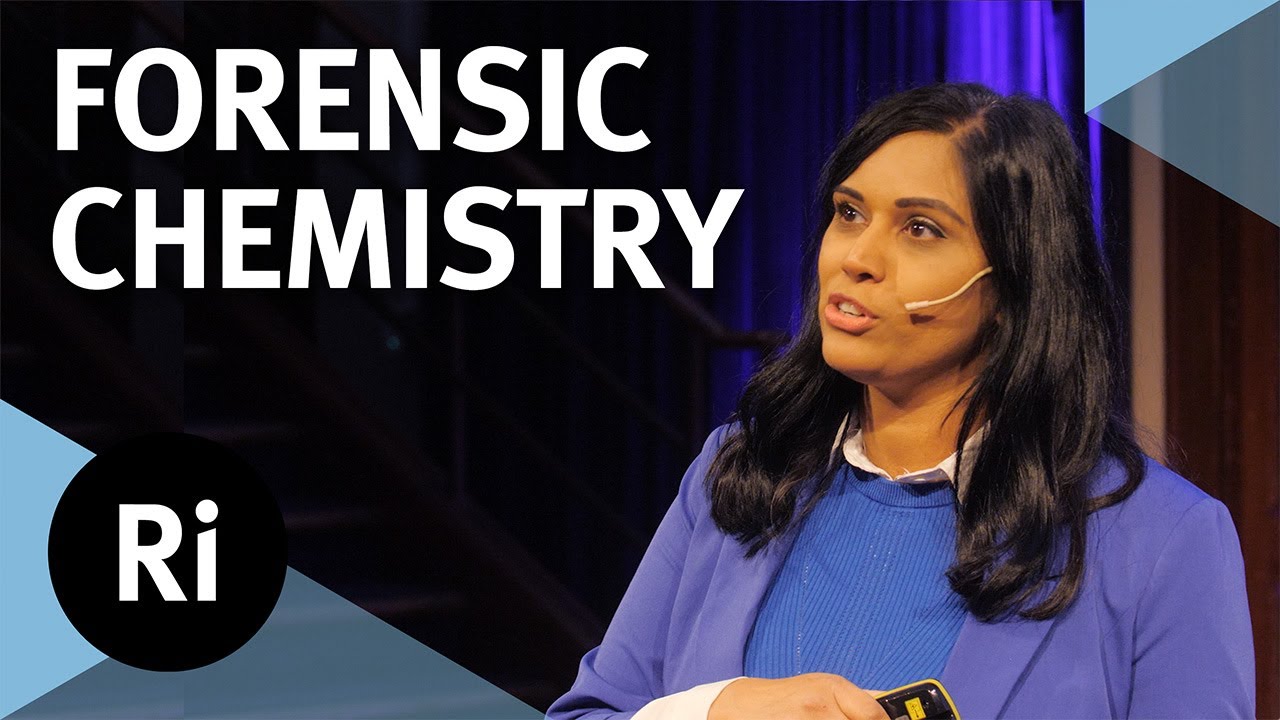
Can chemistry help to catch a killer? - with Baljit Thatti
Explore leading-edge techniques which allow chemists to uncover vital evidence at crime scenes.
This lecture was recorded at the Ri on 20 October 2025.
Watch the Q&A here (exclusively for our Science Supporter members):
Join this channel to get access to Q&As and other perks:
https://www.youtube.com/channel/UCYeF244yNGuFefuFKqxIAXw/join
Subscribe for regular science videos: http://bit.ly/RiSubscRibe
In the hidden world of forensic chemistry, miniscule molecules can tell us stories and invisible traces can provide key information for achieving justice. From fingerprints to fibres and even lipsticks, forensic chemist Baljit Thatti will explain how chemistry provides voices to silent evidence through intricate preservation techniques.
Join Baljit for an exploration into real-world cases and the role of techniques including chromatography and spectroscopy, proving just how vital chemistry is in delivery justice. She will discuss how research is ever evolving to answer crucial questions to draw conclusions from a crime scene, including how even small traces of tyre marks at a scene could lead to valuable information of what vehicle was used in a hit and run.
---
Baljit Thatti is a distinguished academic and a researcher whose work bridges the field of analytical chemistry, forensic science, and biomaterials. As a Head of Department at Kingston University she is a passionate advocate for inclusive education and student empowerment, especially as a first generation graduate herself, and being a mother to a 5-year-old (born during COVID). She has received multiple grants for outreach and inclusion initiatives whereby she passionately delivers the message of Chemistry being fundamental in unlocking crimes. Beyond academia, she actively contributes to the Royal Society of Chemistry (RSC), serving on various committees and has won the 2024 Award for exceptional Service to the RSC.
---
The Ri is on Twitter: http://twitter.com/ri_science
and Facebook: http://www.facebook.com/royalinstitution
and TikTok: https://www.tiktok.com/@ri_science
Listen to the Ri podcast: https://podcasters.spotify.com/pod/show/ri-science-podcast
Donate to the RI and help us bring you more lectures: https://www.rigb.org/support-us/donate-ri
Our editorial policy: https://www.rigb.org/editing-ri-talks-and-moderating-comments
Subscribe for the latest science videos: http://bit.ly/RiNewsletter
Product links on this page may be affiliate links which means it won't cost you any extra but we may earn a small commission if you decide to purchase through the link.
#forensicscience #forensicchemistry #crimesceneinvestigation
This lecture was recorded at the Ri on 20 October 2025.
Watch the Q&A here (exclusively for our Science Supporter members):
Join this channel to get access to Q&As and other perks:
https://www.youtube.com/channel/UCYeF244yNGuFefuFKqxIAXw/join
Subscribe for regular science videos: http://bit.ly/RiSubscRibe
In the hidden world of forensic chemistry, miniscule molecules can tell us stories and invisible traces can provide key information for achieving justice. From fingerprints to fibres and even lipsticks, forensic chemist Baljit Thatti will explain how chemistry provides voices to silent evidence through intricate preservation techniques.
Join Baljit for an exploration into real-world cases and the role of techniques including chromatography and spectroscopy, proving just how vital chemistry is in delivery justice. She will discuss how research is ever evolving to answer crucial questions to draw conclusions from a crime scene, including how even small traces of tyre marks at a scene could lead to valuable information of what vehicle was used in a hit and run.
---
Baljit Thatti is a distinguished academic and a researcher whose work bridges the field of analytical chemistry, forensic science, and biomaterials. As a Head of Department at Kingston University she is a passionate advocate for inclusive education and student empowerment, especially as a first generation graduate herself, and being a mother to a 5-year-old (born during COVID). She has received multiple grants for outreach and inclusion initiatives whereby she passionately delivers the message of Chemistry being fundamental in unlocking crimes. Beyond academia, she actively contributes to the Royal Society of Chemistry (RSC), serving on various committees and has won the 2024 Award for exceptional Service to the RSC.
---
The Ri is on Twitter: http://twitter.com/ri_science
and Facebook: http://www.facebook.com/royalinstitution
and TikTok: https://www.tiktok.com/@ri_science
Listen to the Ri podcast: https://podcasters.spotify.com/pod/show/ri-science-podcast
Donate to the RI and help us bring you more lectures: https://www.rigb.org/support-us/donate-ri
Our editorial policy: https://www.rigb.org/editing-ri-talks-and-moderating-comments
Subscribe for the latest science videos: http://bit.ly/RiNewsletter
Product links on this page may be affiliate links which means it won't cost you any extra but we may earn a small commission if you decide to purchase through the link.
#forensicscience #forensicchemistry #crimesceneinvestigation

The Royal Institution
Videos to make you think more deeply about science. Explosive short films, full length talks from the world’s leading scientists and writers, and videos to challenge the way you look at the world.
The Royal Institution is a 200 year old independent chari...
Science, strings and symphonies – Charles Taylor’s 1989 Christmas Lectures 3/5
The Royal Institution
Did Kathleen Lonsdale deserve a Nobel Prize? Her groundbreaking work explained
The Royal Institution