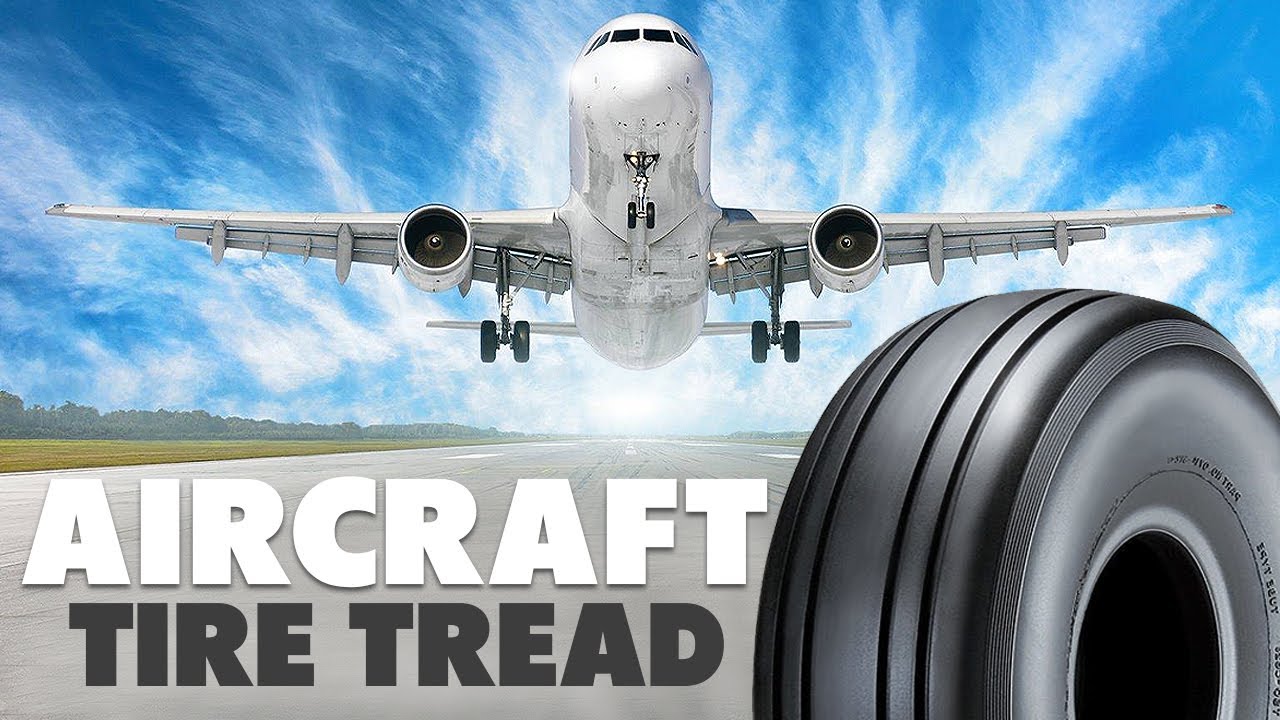
Why all Airplane Tires Have Simple Straight Tread
Have you ever wondered, why do airplanes tires have a straight tread pattern.
Aircraft tires do not need the complex tread patterns found on car tires, because they are not required to handle varied terrain or make sharp turns at high speeds like a car. Instead, they need to perform reliably under high stress, with a focus on stability, durability, and ensuring safe and efficient operation during takeoff and landing.
Here are the main reasons why they use a simple looking tread pattern.
WATER DISPLACEMENT
The straight grooves are designed to efficiently channel water away from the tire’s surface during landings on wet runways. This helps prevent hydroplaning, ensuring that the tire maintains contact with the ground and provides the necessary grip for safe operation.
DIRECTIONAL STABILITY
The straight grooves enhance the tire’s ability to maintain directional stability during takeoff, landing, and taxiing. This is particularly important given the high speeds and forces involved in these phases of flight. The grooves help the tire track straight, reducing the risk of skidding or veering off course.
REDUCED ROLLING RESISTANCE
The ribbed tread design minimizes rolling resistance, which is essential for the aircraft’s performance and fuel efficiency. Lower rolling resistance means the aircraft can accelerate more smoothly and requires less energy to maintain speed, particularly during takeoff.
EVEN WEAR AND DURABILITY
The simple, straight groove pattern, also helps distribute the forces exerted on the tire more evenly across its surface. This even distribution of stress reduces localized wear, extending the life of the tire and ensuring it remains reliable over it’s life cycle.
_______________________________________________________________________________________________
CREDIT LINKS IN ORDER OF APPEARANCE
► Dennis Vijverberg, Brakes Released Youtube Channel - @dennisvijverbergbrakesrele6098
► Michelin Youtube Channel - @MichelinGlobal
► flugsnug Youtube Channel - @flugsnug
► Autocar Youtube Channel - @autocar
► Cargospotter Youtube Channel - @Cargospotter
► Topfelya Youtube Channel - @topfelya
_____________________________________________________________________
? ? WONDER WORLD VIDEO INFORMATION ? ?
✅ For personal story suggestions or business enquiries about product stories / reviews, please contact me on my email from the ABOUT page. Note: All suggestions are welcome, but may not be chosen as they are not suitable for this channel.
❌ COPYRIGHT : Please do not ask for permission to use footage in this video, or the whole video itself, as the ownership of all footage remains that of the owners who gave me permission to use it. If you want to use any of the footage click on the links above and seek permission from the owners.
Aircraft tires do not need the complex tread patterns found on car tires, because they are not required to handle varied terrain or make sharp turns at high speeds like a car. Instead, they need to perform reliably under high stress, with a focus on stability, durability, and ensuring safe and efficient operation during takeoff and landing.
Here are the main reasons why they use a simple looking tread pattern.
WATER DISPLACEMENT
The straight grooves are designed to efficiently channel water away from the tire’s surface during landings on wet runways. This helps prevent hydroplaning, ensuring that the tire maintains contact with the ground and provides the necessary grip for safe operation.
DIRECTIONAL STABILITY
The straight grooves enhance the tire’s ability to maintain directional stability during takeoff, landing, and taxiing. This is particularly important given the high speeds and forces involved in these phases of flight. The grooves help the tire track straight, reducing the risk of skidding or veering off course.
REDUCED ROLLING RESISTANCE
The ribbed tread design minimizes rolling resistance, which is essential for the aircraft’s performance and fuel efficiency. Lower rolling resistance means the aircraft can accelerate more smoothly and requires less energy to maintain speed, particularly during takeoff.
EVEN WEAR AND DURABILITY
The simple, straight groove pattern, also helps distribute the forces exerted on the tire more evenly across its surface. This even distribution of stress reduces localized wear, extending the life of the tire and ensuring it remains reliable over it’s life cycle.
_______________________________________________________________________________________________
CREDIT LINKS IN ORDER OF APPEARANCE
► Dennis Vijverberg, Brakes Released Youtube Channel - @dennisvijverbergbrakesrele6098
► Michelin Youtube Channel - @MichelinGlobal
► flugsnug Youtube Channel - @flugsnug
► Autocar Youtube Channel - @autocar
► Cargospotter Youtube Channel - @Cargospotter
► Topfelya Youtube Channel - @topfelya
_____________________________________________________________________
? ? WONDER WORLD VIDEO INFORMATION ? ?
✅ For personal story suggestions or business enquiries about product stories / reviews, please contact me on my email from the ABOUT page. Note: All suggestions are welcome, but may not be chosen as they are not suitable for this channel.
❌ COPYRIGHT : Please do not ask for permission to use footage in this video, or the whole video itself, as the ownership of all footage remains that of the owners who gave me permission to use it. If you want to use any of the footage click on the links above and seek permission from the owners.

Wonder World
Welcome to Wonder World,
I do short interesting, unique, obscure & overlooked stories, from around the world, that will make you wonder what else you don't know.
Every story has been chosen specifically because it interested me, not because it is a vir...