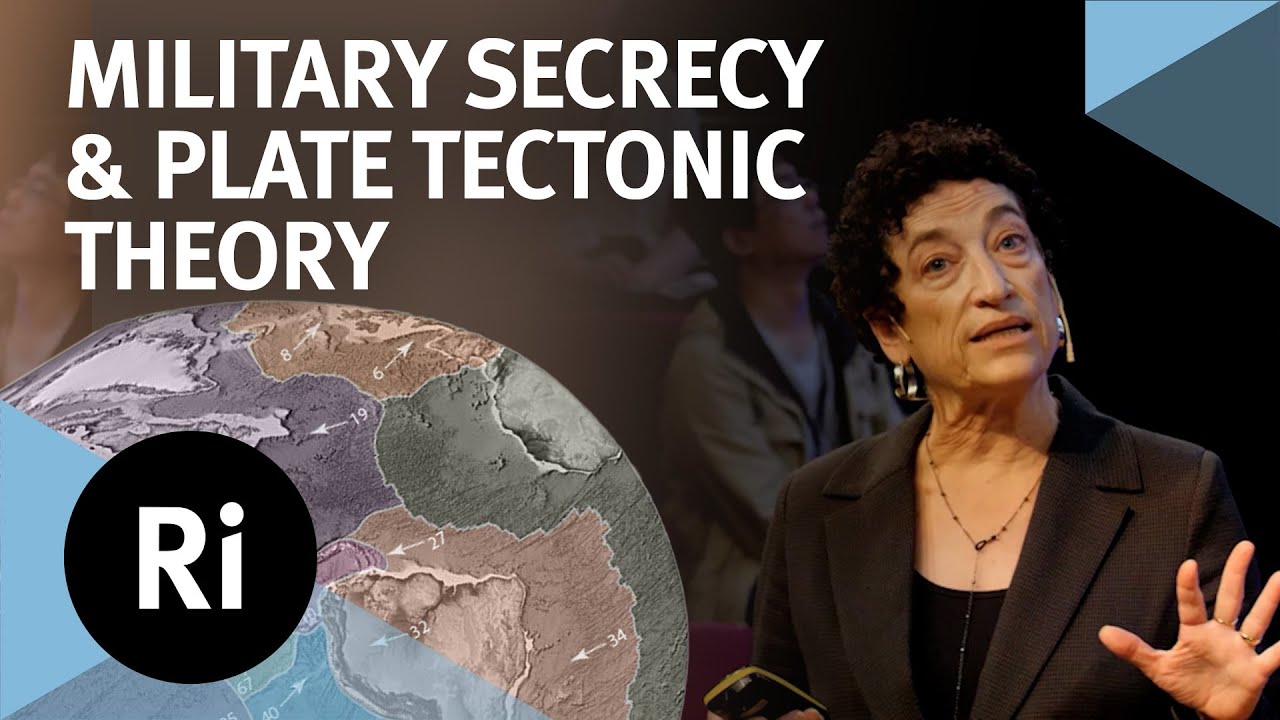
Rethinking the origin of plate tectonics - with Naomi Oreskes
Find out how our understanding of the planet has been shaped by money.
Join this channel to get access to perks:
https://www.youtube.com/channel/UCYeF244yNGuFefuFKqxIAXw/join
Watch the Q&A here (exclusively for our Science Supporters): https://youtu.be/aL0smntJdi8
This talk was recorded at the Ri on 12 May 2025.
Many historians have thought that U.S. Navy funding of oceanography paved the way for plate tectonic theory. By funding extensive investigations of the deep ocean, Navy support enabled scientists to discover and understand sea-floor magnetic stripes, the association of the deep trenches with deep-focus earthquakes, and other key features. Historian of science and geologist Naomi Oreskes presents a different view: the major pieces of plate tectonic theory were in place in the 1930s, and military secrecy in fact prevented the coalescence of plate tectonics, delaying it for three decades.
--
Naomi Oreskes is Professor of the History of Science and Affiliated Professor of Earth and Planetary Sciences at Harvard University. She has worked on studies of geophysics, climate change and the history of science. She sits on the board of US based not-for-profit organisations the National Center for Science Education and Climate Science Legal Defense Fund. She is a distinguished speaker and has published 10 books, including Science on a Mission and The Big Myth.
--
The Ri is on Twitter: http://twitter.com/ri_science
and Facebook: http://www.facebook.com/royalinstitution
and TikTok: https://www.tiktok.com/@ri_science
Listen to the Ri podcast: https://podcasters.spotify.com/pod/show/ri-science-podcast
Donate to the RI and help us bring you more lectures: https://www.rigb.org/support-us/donate-ri
Our editorial policy: https://www.rigb.org/editing-ri-talks-and-moderating-comments
Subscribe for the latest science videos: http://bit.ly/RiNewsletter
Product links on this page may be affiliate links which means it won't cost you any extra but we may earn a small commission if you decide to purchase through the link.
Join this channel to get access to perks:
https://www.youtube.com/channel/UCYeF244yNGuFefuFKqxIAXw/join
Watch the Q&A here (exclusively for our Science Supporters): https://youtu.be/aL0smntJdi8
This talk was recorded at the Ri on 12 May 2025.
Many historians have thought that U.S. Navy funding of oceanography paved the way for plate tectonic theory. By funding extensive investigations of the deep ocean, Navy support enabled scientists to discover and understand sea-floor magnetic stripes, the association of the deep trenches with deep-focus earthquakes, and other key features. Historian of science and geologist Naomi Oreskes presents a different view: the major pieces of plate tectonic theory were in place in the 1930s, and military secrecy in fact prevented the coalescence of plate tectonics, delaying it for three decades.
--
Naomi Oreskes is Professor of the History of Science and Affiliated Professor of Earth and Planetary Sciences at Harvard University. She has worked on studies of geophysics, climate change and the history of science. She sits on the board of US based not-for-profit organisations the National Center for Science Education and Climate Science Legal Defense Fund. She is a distinguished speaker and has published 10 books, including Science on a Mission and The Big Myth.
--
The Ri is on Twitter: http://twitter.com/ri_science
and Facebook: http://www.facebook.com/royalinstitution
and TikTok: https://www.tiktok.com/@ri_science
Listen to the Ri podcast: https://podcasters.spotify.com/pod/show/ri-science-podcast
Donate to the RI and help us bring you more lectures: https://www.rigb.org/support-us/donate-ri
Our editorial policy: https://www.rigb.org/editing-ri-talks-and-moderating-comments
Subscribe for the latest science videos: http://bit.ly/RiNewsletter
Product links on this page may be affiliate links which means it won't cost you any extra but we may earn a small commission if you decide to purchase through the link.

The Royal Institution
Videos to make you think more deeply about science. Explosive short films, full length talks from the world’s leading scientists and writers, and videos to challenge the way you look at the world.
The Royal Institution is a 200 year old independent chari...
Science, strings and symphonies – Charles Taylor’s 1989 Christmas Lectures 3/5
The Royal Institution
Did Kathleen Lonsdale deserve a Nobel Prize? Her groundbreaking work explained
The Royal Institution