The Universe is Stranger Than We Could’ve Imagined, with Mordecai-Mark Mac Low
T-Mobile 5G Home Internet. https://T-Mobile.com/HomeInternet
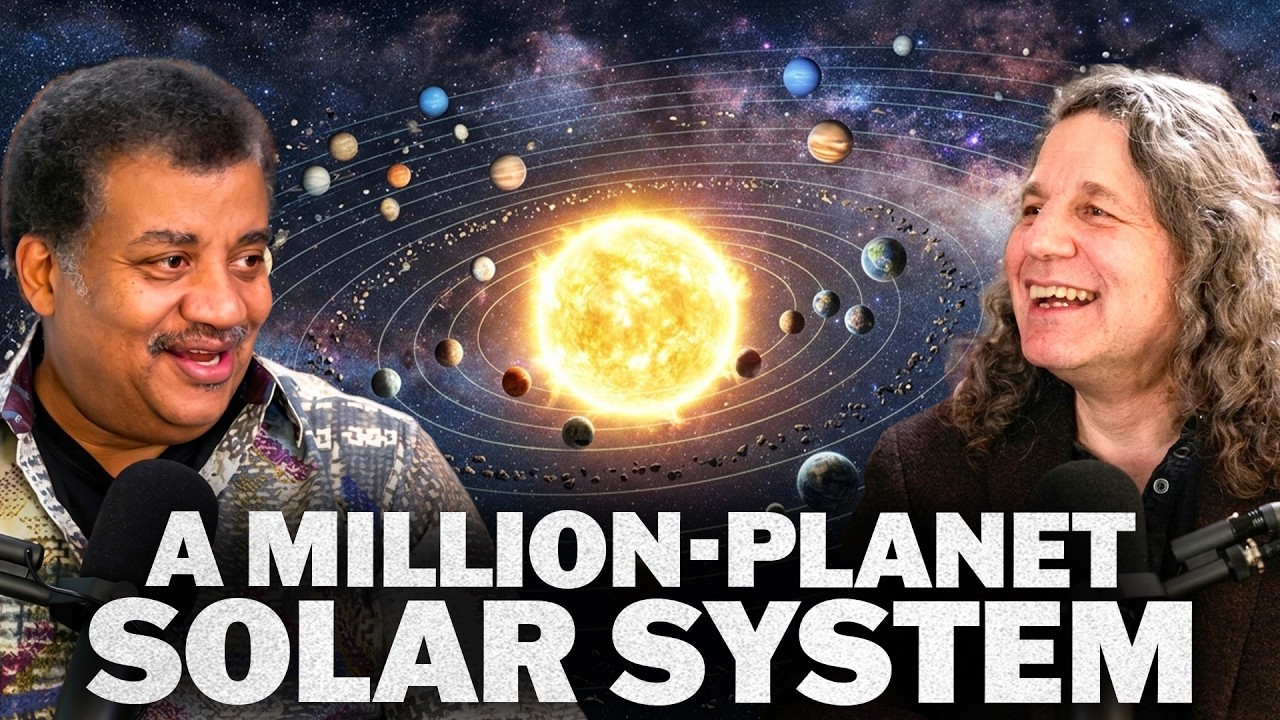
What type of planets orbit black holes? Neil deGrasse Tyson and comic co-host Negin Farsad sit down with Mordecai-Mark Mac Low to crack open the mysteries of galaxy collisions, dark matter, and the massive planetary systems around black holes.
We explore the catalogue of peculiar galaxies that got astronomers thinking about what makes some galaxies weird. Mordecai explains why actual collisions are rare unless you’re a gas cloud headed toward another gas cloud. We talk about active galactic nuclei and how black holes generate the brightest objects in the universe.
Learn how the Earth formed and how accretion disks keep cropping up in different places in the universe. What are planetary systems like around supermassive black holes? Mordecai tells us about Jupiter-mass rocky planets around black holes. Could they hold the potential for life or would they be hostile to biology? A question about Jupiter's gravity leads to the story of Shoemaker-Levy 9, the first observed comet impact in our solar system. Fan questions push further: could Jupiter ignite into a star if it gained enough mass? How is dark matter built into galaxy simulations? How long does it actually take to form a star versus a planet, and could simulations ever reveal whether large moons like ours are common?
Thanks to our Patrons Alex, Sadashiv Nayak, Raviteja K, Lian Zhalka, Thomas Davis, Alex Yumashev, Charles Koehl, Matthew Maldonado, Aleksandre Khatiskatsi, Grig Coker, Matthew Ardebili, Japeth Mitchell, Gaaary, Ian Patton, Casey Steelspine, Veninator, Hannu Latvakoski, Santiago Aguirre, Jonathan Caples, Ryan Wetmore, Dan Lepping, Chris, Frank Betz, William Massar, Jason Durden, Jenny Patton, LiveAlive42, Kesh Iyer, scott ezell, Jesse Jensen, Javier E. Gonzalez, rk89, Courteney Kawalek, James Martin, seth forever, Why So Serious, Jared Kennington, andrew bash, David Pillado, Jennie Hrobak, Mariana, Robbie Rogers, Michael Huckey, Anthony Torres, Luke Gilliam, David Hasenauer, Libby Higgins, Willie Lo, Mike B, and Rhagor for supporting us this week.
Timestamps:
00:00 - Introduction: Mordecai-Mark Mac Low
03:51 - Bug Splat Galaxies
06:36 - When Two Galaxies Collide
09:09 - How Can a Black Hole Be Bright?
16:02 - Planets Around Black Holes
23:40 - The First Observed Comet to Hit a Planet
28:26 - Turbulence & Magnetic Fields in Star Formation
35:12 - Making Jupiter BIGGER
40:48 - How Do You Factor in Dark Matter?
45:20 - How Long Does it Take to Form a Star or a Planet?
47:30 - Planets with Big Moons (Like Ours)
51:40 - The Universe is Stranger Than We Thought
57:16 - Closing Thoughts
Check out our second channel, @StarTalkPlus
Get the latest StarTalk book, 'To Infinity and Beyond: A Journey of Cosmic Discovery' on Amazon: https://amzn.to/3PL0NFn
Support us on Patreon: https://www.patreon.com/startalkradio
FOLLOW or SUBSCRIBE to StarTalk:
Twitter: http://twitter.com/startalkradio
Facebook: https://www.facebook.com/StarTalk
Instagram: https://www.instagram.com/startalk
About StarTalk:
Science meets pop culture on StarTalk! Astrophysicist & Hayden Planetarium director Neil deGrasse Tyson, his comic co-hosts, guest celebrities & scientists discuss astronomy, physics, and everything else about life in the universe. Keep Looking Up!
#StarTalk #NeildeGrasseTyson
What type of planets orbit black holes? Neil deGrasse Tyson and comic co-host Negin Farsad sit down with Mordecai-Mark Mac Low to crack open the mysteries of galaxy collisions, dark matter, and the massive planetary systems around black holes.
We explore the catalogue of peculiar galaxies that got astronomers thinking about what makes some galaxies weird. Mordecai explains why actual collisions are rare unless you’re a gas cloud headed toward another gas cloud. We talk about active galactic nuclei and how black holes generate the brightest objects in the universe.
Learn how the Earth formed and how accretion disks keep cropping up in different places in the universe. What are planetary systems like around supermassive black holes? Mordecai tells us about Jupiter-mass rocky planets around black holes. Could they hold the potential for life or would they be hostile to biology? A question about Jupiter's gravity leads to the story of Shoemaker-Levy 9, the first observed comet impact in our solar system. Fan questions push further: could Jupiter ignite into a star if it gained enough mass? How is dark matter built into galaxy simulations? How long does it actually take to form a star versus a planet, and could simulations ever reveal whether large moons like ours are common?
Thanks to our Patrons Alex, Sadashiv Nayak, Raviteja K, Lian Zhalka, Thomas Davis, Alex Yumashev, Charles Koehl, Matthew Maldonado, Aleksandre Khatiskatsi, Grig Coker, Matthew Ardebili, Japeth Mitchell, Gaaary, Ian Patton, Casey Steelspine, Veninator, Hannu Latvakoski, Santiago Aguirre, Jonathan Caples, Ryan Wetmore, Dan Lepping, Chris, Frank Betz, William Massar, Jason Durden, Jenny Patton, LiveAlive42, Kesh Iyer, scott ezell, Jesse Jensen, Javier E. Gonzalez, rk89, Courteney Kawalek, James Martin, seth forever, Why So Serious, Jared Kennington, andrew bash, David Pillado, Jennie Hrobak, Mariana, Robbie Rogers, Michael Huckey, Anthony Torres, Luke Gilliam, David Hasenauer, Libby Higgins, Willie Lo, Mike B, and Rhagor for supporting us this week.
Timestamps:
00:00 - Introduction: Mordecai-Mark Mac Low
03:51 - Bug Splat Galaxies
06:36 - When Two Galaxies Collide
09:09 - How Can a Black Hole Be Bright?
16:02 - Planets Around Black Holes
23:40 - The First Observed Comet to Hit a Planet
28:26 - Turbulence & Magnetic Fields in Star Formation
35:12 - Making Jupiter BIGGER
40:48 - How Do You Factor in Dark Matter?
45:20 - How Long Does it Take to Form a Star or a Planet?
47:30 - Planets with Big Moons (Like Ours)
51:40 - The Universe is Stranger Than We Thought
57:16 - Closing Thoughts
Check out our second channel, @StarTalkPlus
Get the latest StarTalk book, 'To Infinity and Beyond: A Journey of Cosmic Discovery' on Amazon: https://amzn.to/3PL0NFn
Support us on Patreon: https://www.patreon.com/startalkradio
FOLLOW or SUBSCRIBE to StarTalk:
Twitter: http://twitter.com/startalkradio
Facebook: https://www.facebook.com/StarTalk
Instagram: https://www.instagram.com/startalk
About StarTalk:
Science meets pop culture on StarTalk! Astrophysicist & Hayden Planetarium director Neil deGrasse Tyson, his comic co-hosts, guest celebrities & scientists discuss astronomy, physics, and everything else about life in the universe. Keep Looking Up!
#StarTalk #NeildeGrasseTyson

StarTalk
Science meets pop culture on StarTalk! Astrophysicist & Hayden Planetarium director Neil deGrasse Tyson, his comic co-hosts, guest celebrities & scientists discuss astronomy, physics, and everything else about life in the universe. Keep Looking Up!...