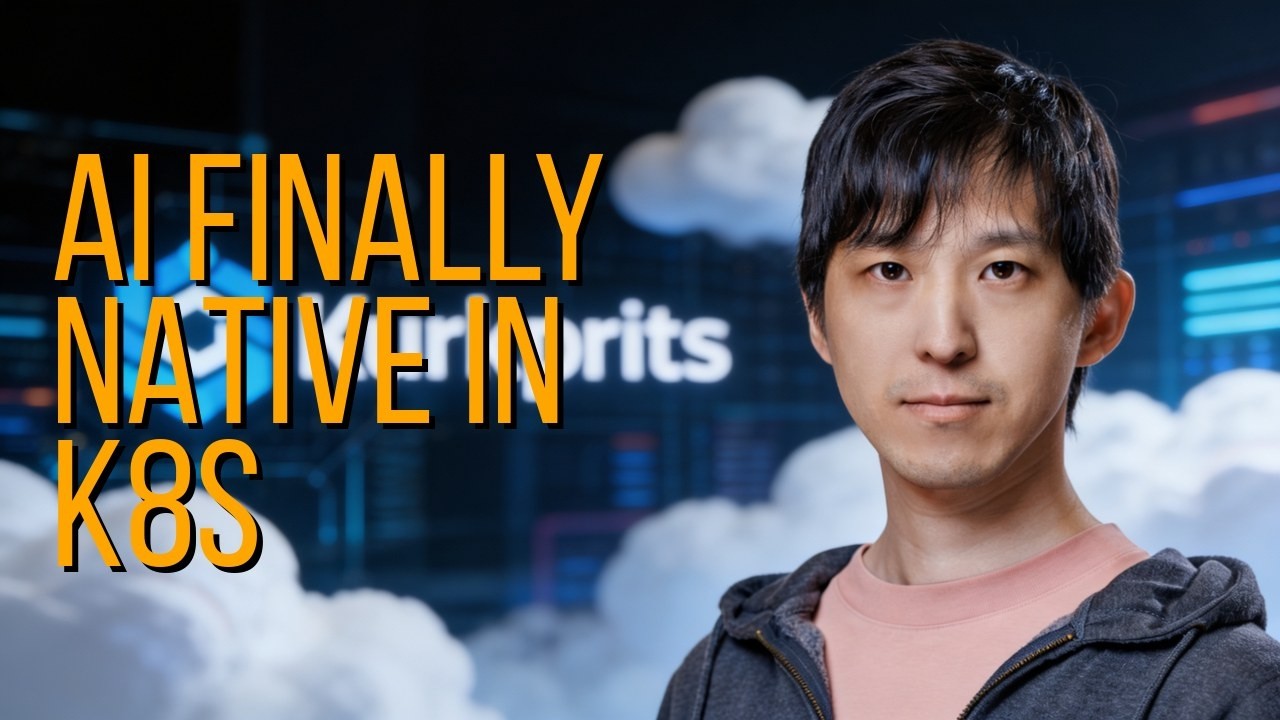
Kubernetes 1.36: AI Workloads, GPU Scheduling & Security | Ryota Sawada
Kubernetes clusters running AI and ML workloads are hitting hard limits — GPU scheduling is brittle, resource allocation is manual, and Kubelet authorization is dangerously coarse. As enterprise teams push LLM inference and AI agents into production, the gap between what Kubernetes can do natively and what these workloads actually demand has become a critical operational risk.
In this exclusive interview with Swapnil Bhartiya at TFiR, Ryota Sawada, Kubernetes 1.36 Release Lead, breaks down how the "Haru" release directly addresses these gaps — introducing Workload Aware Scheduling (WAS), expanded Dynamic Resource Allocation (DRA), fine-grained Kubelet API authorization at GA, and a record-breaking 70 Kubernetes Enhancement Proposals (KEPs), including 18 features reaching stable.
Key Topics Covered:
- Workload Aware Scheduling (WAS): New Workload and PodGroup APIs enabling native gang scheduling for multi-pod AI/ML jobs requiring coordinated GPU resource allocation
- Dynamic Resource Allocation (DRA) integration with PodGroup for full lifecycle control of GPU and accelerator peripherals in LLM inference and ML training pipelines
- Fine-grained Kubelet API authorization reaching General Availability — sub-resource scoping to eliminate over-permissioned observability stacks in multi-tenant clusters
- Alpha-to-beta graduation pipeline and community signal loops that drive production-grade feature stability across SIG Node, SIG Network, and DRA working groups
- Release naming, the "Haru" theme, and the daily feature blog cadence shipping post-release on kubernetes.io
Read the full story & transcript at www.tfir.io
#Kubernetes #Kubernetes136 #Haru #KubernetesRelease #AI #GPUScheduling #DynamicResourceAllocation #DRA #WorkloadAwareScheduling #CloudNative #CNCF #KubernetesSecurity #Kubelet #OpenSource #LinuxFoundation
In this exclusive interview with Swapnil Bhartiya at TFiR, Ryota Sawada, Kubernetes 1.36 Release Lead, breaks down how the "Haru" release directly addresses these gaps — introducing Workload Aware Scheduling (WAS), expanded Dynamic Resource Allocation (DRA), fine-grained Kubelet API authorization at GA, and a record-breaking 70 Kubernetes Enhancement Proposals (KEPs), including 18 features reaching stable.
Key Topics Covered:
- Workload Aware Scheduling (WAS): New Workload and PodGroup APIs enabling native gang scheduling for multi-pod AI/ML jobs requiring coordinated GPU resource allocation
- Dynamic Resource Allocation (DRA) integration with PodGroup for full lifecycle control of GPU and accelerator peripherals in LLM inference and ML training pipelines
- Fine-grained Kubelet API authorization reaching General Availability — sub-resource scoping to eliminate over-permissioned observability stacks in multi-tenant clusters
- Alpha-to-beta graduation pipeline and community signal loops that drive production-grade feature stability across SIG Node, SIG Network, and DRA working groups
- Release naming, the "Haru" theme, and the daily feature blog cadence shipping post-release on kubernetes.io
Read the full story & transcript at www.tfir.io
#Kubernetes #Kubernetes136 #Haru #KubernetesRelease #AI #GPUScheduling #DynamicResourceAllocation #DRA #WorkloadAwareScheduling #CloudNative #CNCF #KubernetesSecurity #Kubelet #OpenSource #LinuxFoundation

The Linux Foundation
The Linux Foundation is a nonprofit consortium dedicated to fostering the growth of Linux and collaborative software development. Founded in 2000, the organization sponsors the work of Linux creator Linus Torvalds and promotes, protects and advances the L...