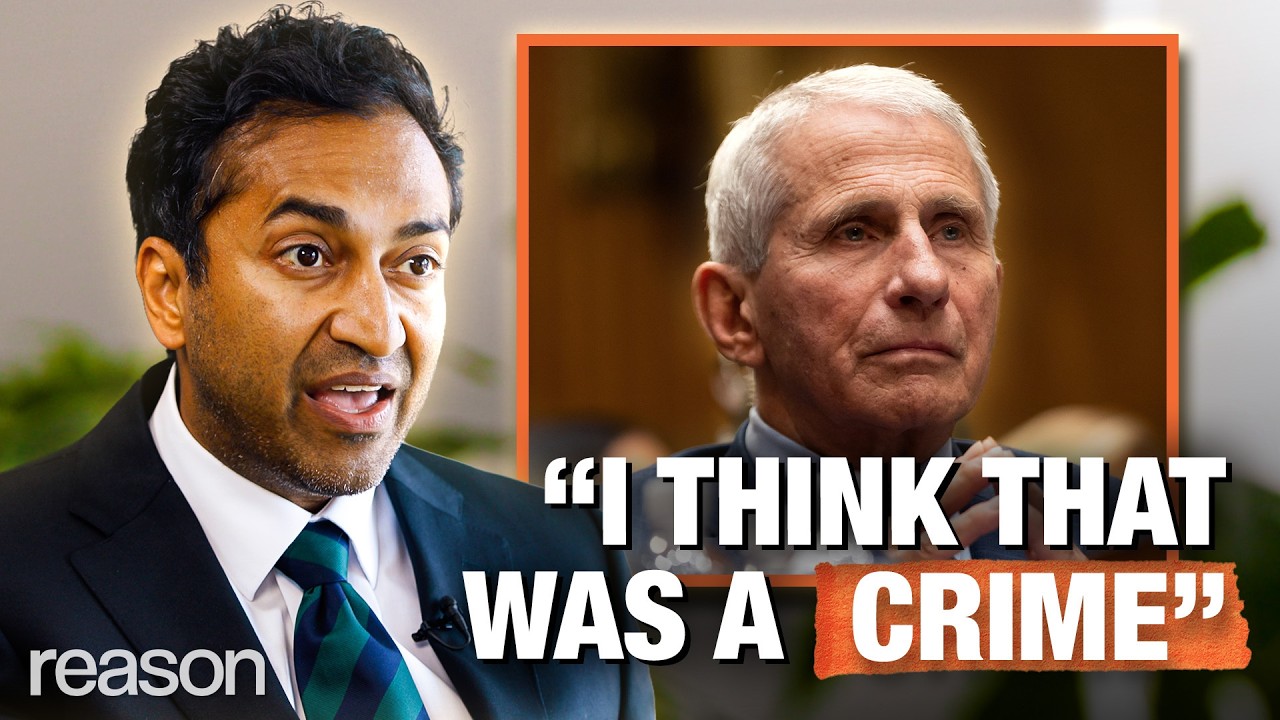
Vinay Prasad: Public Health in This Country Is So Broken
Vinay Prasad rose to fame as a COVID-era public health establishment critic. Then he became part of the public health establishment. Now he's back on the outside following his controversial tenure at the Food and Drug Administration (FDA) as director of the Center for Biologics Evaluation and Research (CBER), which is responsible for approving vaccines and gene therapies.
In this interview with Reason's Zach Weissmueller, Prasad, a physician, author, and professor at the University of California, San Francisco, responds to the array of intense criticism he received during his tenure, ranging from agency insiders complaining about his management style to Wall Street Journal editorial writers branding him a "Bernie Sanders acolyte in MAHA drag" to conservative influencers such as Laura Loomer deriding him as a progressive-left "saboteur."
He defends his decision to reject Moderna's mRNA flu vaccine application, which the agency has since approved following his departure, and explains a controversial internal memo in which he wrote that "at least 10 children have died after and because of receiving COVID-19 vaccination" and that "for the first time, the US FDA will acknowledge that COVID-19 vaccines have killed American children." The official FDA report made public after Prasad left identified zero "certain" childhood deaths linked to the vaccine, with five classified as "possibly" and two as "probably."
"They changed the report. I had a draft report with 10 [likely deaths]. They changed it after the media publicity of my letter," says Prasad, who believes the data were altered for "political or professional" reasons.
While he entered the job with the intention to raise the standards for drug approvals, Prasad says his firsthand experience witnessing just how entrenched the political and bureaucratic problems at the FDA are has made him "a bit more libertarian" and open to the idea of "Consumer Reports–style agencies" competing with the government on drug approvals, which would offer "people in America greater flexibility in what kind of products they can try."
Prasad also reacts to the recent publication of top COVID adviser Anthony Fauci's diaries, whom he says is likely guilty of criminal conduct for his role in funding gain-of-function research.
"I can't think of a single policy [Fauci] actually got right when he was running the federal health policy," says Prasad.
-------
0:00—Teaser
0:48—Transitioning from FDA critic to insider
2:39—Fauci's diaries
7:40—The origins of COVID-19
9:11—Did Fauci commit any crimes?
11:53—Aspirations for public health reform
13:22—Vaccine skepticism and criticisms
20:10—Moderna mRNA flu vaccine
26:35—COVID-19 vaccines and children
34:00—The Trump administration and deregulation
37:51—Drug approval barriers at the FDA
42:01—Wall Street Journal criticism
46:45—Has Prasad become more libertarian?
53:36—Anthropic CEO Dario Amodei's criticisms of the FDA
57:46—Peptides
59:45—Why did Prasad leave the FDA?
1:02:43—Is true government reform possible?
1:05:45—How can public health regain public trust?
Producer: Paul Alexander
Director of photography: Kevin Alexander
Audio mixer: Ian Keyser
In this interview with Reason's Zach Weissmueller, Prasad, a physician, author, and professor at the University of California, San Francisco, responds to the array of intense criticism he received during his tenure, ranging from agency insiders complaining about his management style to Wall Street Journal editorial writers branding him a "Bernie Sanders acolyte in MAHA drag" to conservative influencers such as Laura Loomer deriding him as a progressive-left "saboteur."
He defends his decision to reject Moderna's mRNA flu vaccine application, which the agency has since approved following his departure, and explains a controversial internal memo in which he wrote that "at least 10 children have died after and because of receiving COVID-19 vaccination" and that "for the first time, the US FDA will acknowledge that COVID-19 vaccines have killed American children." The official FDA report made public after Prasad left identified zero "certain" childhood deaths linked to the vaccine, with five classified as "possibly" and two as "probably."
"They changed the report. I had a draft report with 10 [likely deaths]. They changed it after the media publicity of my letter," says Prasad, who believes the data were altered for "political or professional" reasons.
While he entered the job with the intention to raise the standards for drug approvals, Prasad says his firsthand experience witnessing just how entrenched the political and bureaucratic problems at the FDA are has made him "a bit more libertarian" and open to the idea of "Consumer Reports–style agencies" competing with the government on drug approvals, which would offer "people in America greater flexibility in what kind of products they can try."
Prasad also reacts to the recent publication of top COVID adviser Anthony Fauci's diaries, whom he says is likely guilty of criminal conduct for his role in funding gain-of-function research.
"I can't think of a single policy [Fauci] actually got right when he was running the federal health policy," says Prasad.
-------
0:00—Teaser
0:48—Transitioning from FDA critic to insider
2:39—Fauci's diaries
7:40—The origins of COVID-19
9:11—Did Fauci commit any crimes?
11:53—Aspirations for public health reform
13:22—Vaccine skepticism and criticisms
20:10—Moderna mRNA flu vaccine
26:35—COVID-19 vaccines and children
34:00—The Trump administration and deregulation
37:51—Drug approval barriers at the FDA
42:01—Wall Street Journal criticism
46:45—Has Prasad become more libertarian?
53:36—Anthropic CEO Dario Amodei's criticisms of the FDA
57:46—Peptides
59:45—Why did Prasad leave the FDA?
1:02:43—Is true government reform possible?
1:05:45—How can public health regain public trust?
Producer: Paul Alexander
Director of photography: Kevin Alexander
Audio mixer: Ian Keyser

ReasonTV
Meet the biohackers, brewers, bitcoiners, makers, growers, freaks, and visionaries exploring new ways of living in an increasingly individualistic world. Watch investigative stories about the bureaucrats and busybodies fighting for control over our lives....