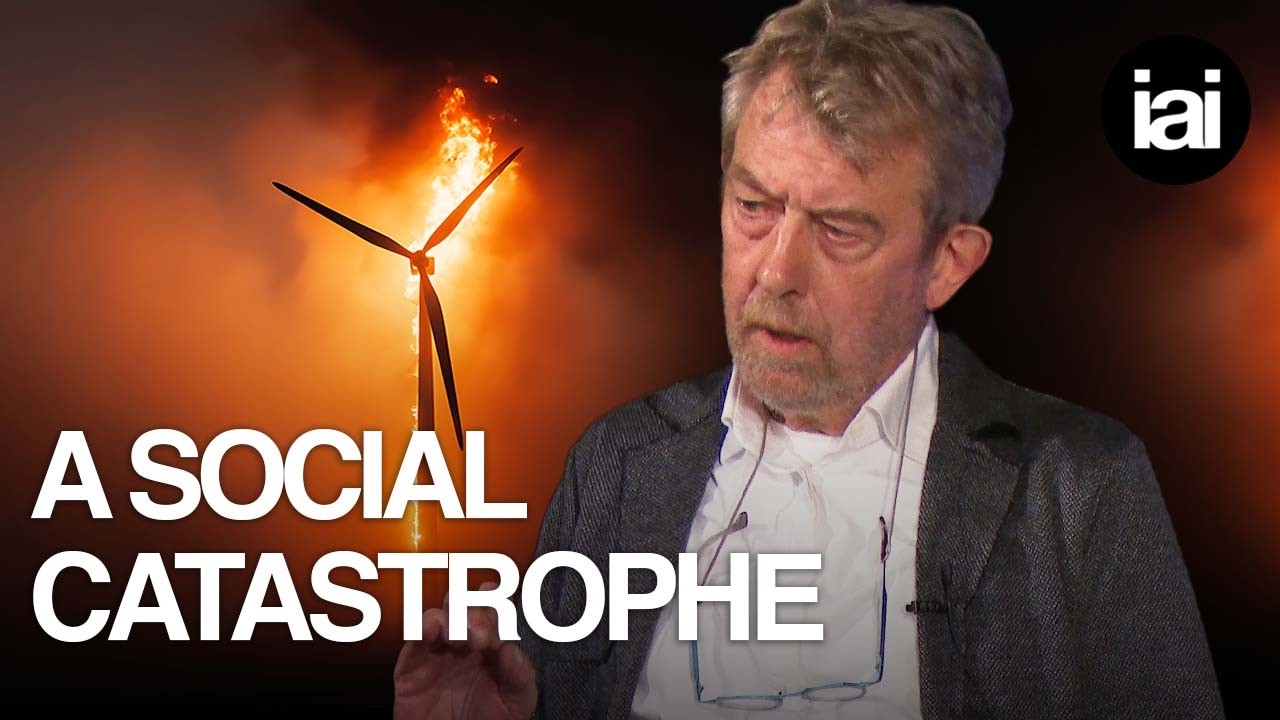
Why green technology will not save us from ourselves | Sheila Jasanoff, Erik Swyngedouw, Paul Stein
Sheila Jasanoff, Erik Swyngedouw and Paul Stein discuss whether technological progress will save our planet.
What is the unseen global cost of sustainability?
With a free trial, you can watch the full debate NOW at https://iai.tv/video/the-green-technology-paradox?utm_source=YouTube&utm_medium=description
Central to Western thought has been the idea that through science and technology, we can understand the world and improve our circumstances. Green tech is seemingly a contemporary example, aiming to provide a clean solution to our energy needs. But critics argue the solution is flawed. The production of solar panels, wind turbines, and batteries is energy-intensive, fossil fuel-reliant, and generates toxic waste. Electric cars require six times the mineral inputs of conventional ones. Demand for the resources is generating international tension and encouraging land grabs for supplies across Africa, South America, as well as US-backed deals to control Ukrainian mines.
Is it a mistake to see science and technology as the primary means to solve our problems? Does technology necessarily bring its own risks and embed an exploitative relation to the natural world? Or is it the miraculous means by which human experience has been transformed from short lives devoted to finding food, shelter, and safety to ones where every day needs and comforts are provided for the great majority?
#greentechnology #nuclearpower #sustainability
Erik Swyngedouw is a leading critical geographer at the University of Manchester. He combines political ecology and economics with analyses of contemporary capitalism, showing how urbanisation, water, and governance are entwined with power and democracy.
Harvard scholar Sheila Jasanoff is one of the most influential voices in Science and Technology Studies, dismantling the myth that science and technology operate above human choices, cultural assumptions, and political power.
Paul Stein is one of the most influential engineers of his generation, shaping aerospace and energy as former CTO of Rolls-Royce and co-founder of Floral Energy. His work links technological innovation to climate action and national strategy.
Hosted by Isabel Woodford.
00:00 Intro
00:40 Erik Swyngedouw on how technological progress deepens the global divide
04:48 Paul Stein on how technological progress works better than behavioural change
07:19 Sheila Jasanoff on what it is that technology should do for us?
10:50 Is technology inherently exploitative to the natural world?
16:42 Is there an alternative to green energy?
The Institute of Art and Ideas features videos and articles from cutting edge thinkers discussing the ideas that are shaping the world, from metaphysics to string theory, technology to democracy, aesthetics to genetics. Subscribe today! https://iai.tv/subscribe?utm_source=YouTube&utm_medium=description&utm_campaign=the-green-technology-paradox
For debates and talks: https://iai.tv
For articles: https://iai.tv/articles
For courses: https://iai.tv/iai-academy/courses
What is the unseen global cost of sustainability?
With a free trial, you can watch the full debate NOW at https://iai.tv/video/the-green-technology-paradox?utm_source=YouTube&utm_medium=description
Central to Western thought has been the idea that through science and technology, we can understand the world and improve our circumstances. Green tech is seemingly a contemporary example, aiming to provide a clean solution to our energy needs. But critics argue the solution is flawed. The production of solar panels, wind turbines, and batteries is energy-intensive, fossil fuel-reliant, and generates toxic waste. Electric cars require six times the mineral inputs of conventional ones. Demand for the resources is generating international tension and encouraging land grabs for supplies across Africa, South America, as well as US-backed deals to control Ukrainian mines.
Is it a mistake to see science and technology as the primary means to solve our problems? Does technology necessarily bring its own risks and embed an exploitative relation to the natural world? Or is it the miraculous means by which human experience has been transformed from short lives devoted to finding food, shelter, and safety to ones where every day needs and comforts are provided for the great majority?
#greentechnology #nuclearpower #sustainability
Erik Swyngedouw is a leading critical geographer at the University of Manchester. He combines political ecology and economics with analyses of contemporary capitalism, showing how urbanisation, water, and governance are entwined with power and democracy.
Harvard scholar Sheila Jasanoff is one of the most influential voices in Science and Technology Studies, dismantling the myth that science and technology operate above human choices, cultural assumptions, and political power.
Paul Stein is one of the most influential engineers of his generation, shaping aerospace and energy as former CTO of Rolls-Royce and co-founder of Floral Energy. His work links technological innovation to climate action and national strategy.
Hosted by Isabel Woodford.
00:00 Intro
00:40 Erik Swyngedouw on how technological progress deepens the global divide
04:48 Paul Stein on how technological progress works better than behavioural change
07:19 Sheila Jasanoff on what it is that technology should do for us?
10:50 Is technology inherently exploitative to the natural world?
16:42 Is there an alternative to green energy?
The Institute of Art and Ideas features videos and articles from cutting edge thinkers discussing the ideas that are shaping the world, from metaphysics to string theory, technology to democracy, aesthetics to genetics. Subscribe today! https://iai.tv/subscribe?utm_source=YouTube&utm_medium=description&utm_campaign=the-green-technology-paradox
For debates and talks: https://iai.tv
For articles: https://iai.tv/articles
For courses: https://iai.tv/iai-academy/courses

The Institute of Art and Ideas
The Institute of Art and Ideas creates hundreds of educational debates, lectures, and interviews on Philosophy, Science, Politics, and Arts.
Learn from world-leading thinkers on the big ideas. From Hitchens to Galloway, Penrose to Pigliucci, our experts...
Beauty may increase the probability of truth in science | Phil Halper
The Institute of Art and Ideas
The future of inequality is biological | Aaron Bastani, Zoltan Istvan
The Institute of Art and Ideas
'I wasn't very good at maths at school' | Roger Penrose and Brian Cox
The Institute of Art and Ideas
Everything you know about antidepressants is wrong | Joanna Moncrieff
The Institute of Art and Ideas