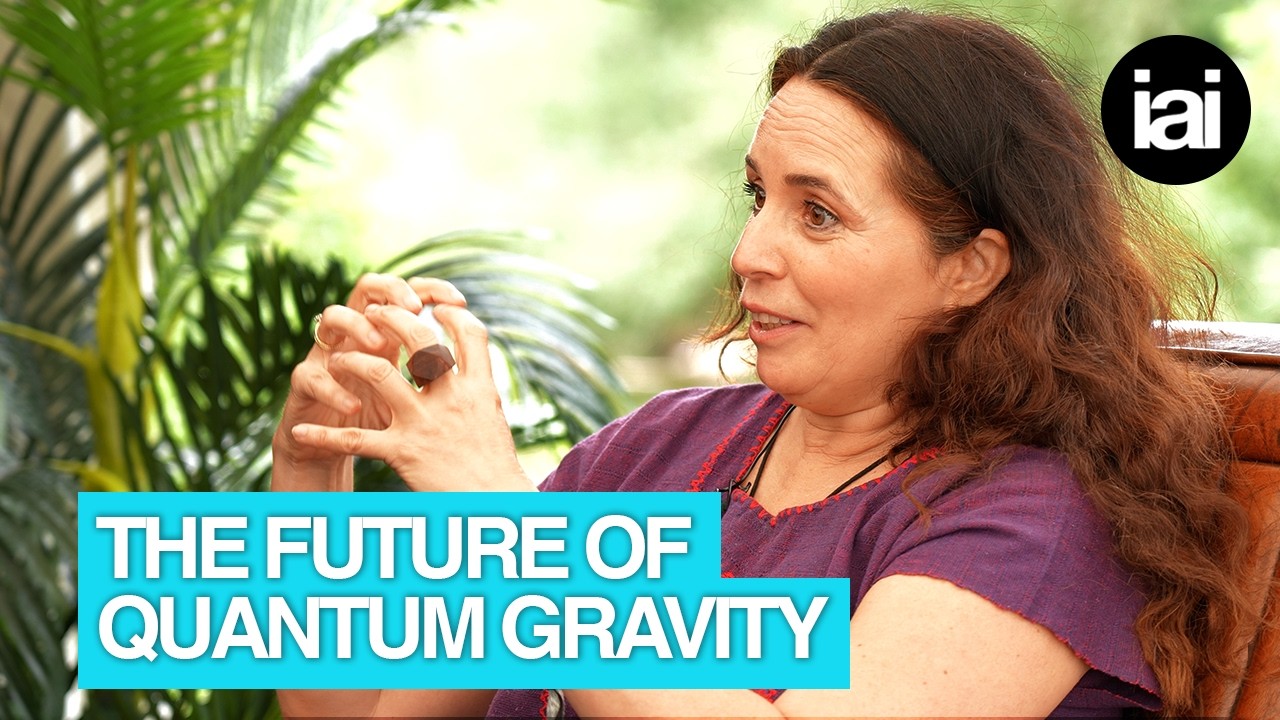
What quantum information can teach us about spacetime | Ivette Fuentes
Ivette Fuentes discusses how quantum mechanics and gravity come together.
How can we increase communication between the different scientific disciplines?
With a free trial, you can watch Ivette discuss the scaling laws of the universe and the fundamental nature of reality with Sabine Hossenfelder and James Ladyman NOW at https://iai.tv/video/the-one-and-the-many?utm_source=YouTube&utm_medium=description
Breakthroughs in experimental physics have traditionally come from large-scale projects like LIGO and CERN - but leading physicist Ivette Fuentes explains that cheaper and more accessible tabletop experiments could be the key to testing quantum gravity. In this interview, she discusses her collaboration with Roger Penrose, her upcoming model challenging established approaches to quantum gravity, and also reflects candidly on being a woman in physics and the work still needed to change its culture.
#quantumphysics #quantum #physics
Ivette Fuentes is a Professor of Quantum Physics at the University of Southampton and an Emmy Fellow at Keble College, University of Oxford. She earned her PhD in physics from the University of Nottingham and completed postdoctoral research at the University of Vienna, where she worked extensively on quantum optics and relativistic quantum information theory. Fuentes has since established herself as a leading figure in the study of quantum gravity, focusing on how quantum phenomena behave in curved spacetime — bridging quantum mechanics with general relativity.
The Institute of Art and Ideas features videos and articles from cutting edge thinkers discussing the ideas that are shaping the world, from metaphysics to string theory, technology to democracy, aesthetics to genetics. Subscribe today! https://iai.tv/subscribe?utm_source=YouTube&utm_medium=description&utm_campaign=https://iai.tv/video/ivette-fuentes
0:00 Intro
0:36 Why is it so important now to connect theory with experimental efforts?
2:11 Why are you excited by the small scale versus the large scale
3:38 What makes you feel optimistic about the notion of quantum gravity?
5:11 Is that in any way congruent with Roger Penrose's ideas
5:49 What has your experience been like working with Roger Penrose
7:52 What are your views on consciousness and how it interacts with quantum mechanics?
8:55 What can we learn from quantum information about spacetime?
10:56 Do you think communication and collaboration needs to be increased in physics?
12:44 What is currently inspiring you in the field?
14:36 Have you ever been tempted to dip into experimental physics?
15:49 How do you think your current work will be received?
17:45 What have you learned from all your travels?
19:00 What has your experience been like as a woman in a field dominated by men?
For debates and talks: https://iai.tv
For articles: https://iai.tv/articles
For courses: https://iai.tv/iai-academy/courses
How can we increase communication between the different scientific disciplines?
With a free trial, you can watch Ivette discuss the scaling laws of the universe and the fundamental nature of reality with Sabine Hossenfelder and James Ladyman NOW at https://iai.tv/video/the-one-and-the-many?utm_source=YouTube&utm_medium=description
Breakthroughs in experimental physics have traditionally come from large-scale projects like LIGO and CERN - but leading physicist Ivette Fuentes explains that cheaper and more accessible tabletop experiments could be the key to testing quantum gravity. In this interview, she discusses her collaboration with Roger Penrose, her upcoming model challenging established approaches to quantum gravity, and also reflects candidly on being a woman in physics and the work still needed to change its culture.
#quantumphysics #quantum #physics
Ivette Fuentes is a Professor of Quantum Physics at the University of Southampton and an Emmy Fellow at Keble College, University of Oxford. She earned her PhD in physics from the University of Nottingham and completed postdoctoral research at the University of Vienna, where she worked extensively on quantum optics and relativistic quantum information theory. Fuentes has since established herself as a leading figure in the study of quantum gravity, focusing on how quantum phenomena behave in curved spacetime — bridging quantum mechanics with general relativity.
The Institute of Art and Ideas features videos and articles from cutting edge thinkers discussing the ideas that are shaping the world, from metaphysics to string theory, technology to democracy, aesthetics to genetics. Subscribe today! https://iai.tv/subscribe?utm_source=YouTube&utm_medium=description&utm_campaign=https://iai.tv/video/ivette-fuentes
0:00 Intro
0:36 Why is it so important now to connect theory with experimental efforts?
2:11 Why are you excited by the small scale versus the large scale
3:38 What makes you feel optimistic about the notion of quantum gravity?
5:11 Is that in any way congruent with Roger Penrose's ideas
5:49 What has your experience been like working with Roger Penrose
7:52 What are your views on consciousness and how it interacts with quantum mechanics?
8:55 What can we learn from quantum information about spacetime?
10:56 Do you think communication and collaboration needs to be increased in physics?
12:44 What is currently inspiring you in the field?
14:36 Have you ever been tempted to dip into experimental physics?
15:49 How do you think your current work will be received?
17:45 What have you learned from all your travels?
19:00 What has your experience been like as a woman in a field dominated by men?
For debates and talks: https://iai.tv
For articles: https://iai.tv/articles
For courses: https://iai.tv/iai-academy/courses

The Institute of Art and Ideas
The Institute of Art and Ideas creates hundreds of educational debates, lectures, and interviews on Philosophy, Science, Politics, and Arts.
Learn from world-leading thinkers on the big ideas. From Hitchens to Galloway, Penrose to Pigliucci, our experts...
Beauty may increase the probability of truth in science | Phil Halper
The Institute of Art and Ideas
The future of inequality is biological | Aaron Bastani, Zoltan Istvan
The Institute of Art and Ideas
'I wasn't very good at maths at school' | Roger Penrose and Brian Cox
The Institute of Art and Ideas
Everything you know about antidepressants is wrong | Joanna Moncrieff
The Institute of Art and Ideas