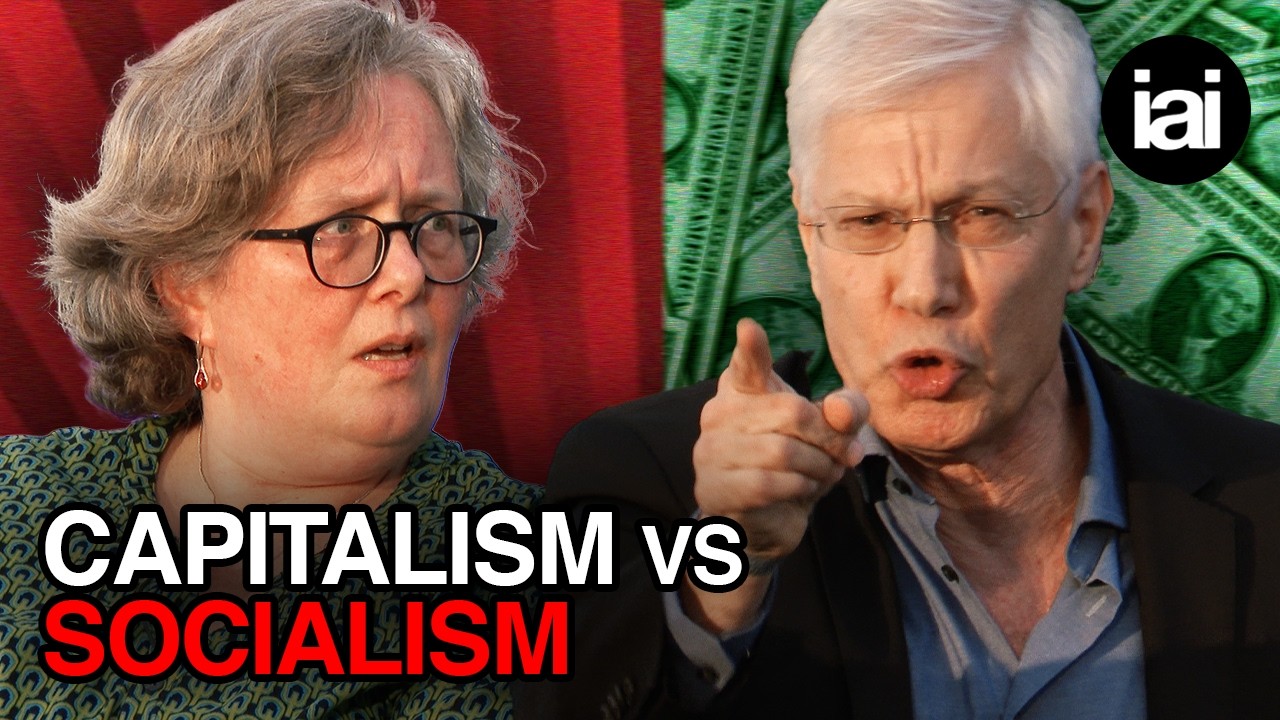
How wealth inequality undermines democracy | Yaron Brook, Ingrid Robeyns, Thangam Debbonaire
Yaron Brook, Ingrid Robeyns, and Thangam Debbonaire debate the economics and ethics of wealth inequality and redistribution.
Should the government be involved in redistributing wealth?
With a free trial, you can watch the full debate NOW at https://iai.tv/video/riches-and-rags?utm_source=YouTube&utm_medium=description
It is estimated that the top 1% hold about half of the world's wealth, or roughly the same as everyone else put together. And most of us think this profound inequality should be reduced. But some economists argue it is unknown whether striving for equality delivers better lives. In forty years China has lifted 770 million people out of poverty, while at the same time, according to the IMF becoming "one of the most unequal countries in the world". It is claimed that reducing inequality is the wrong goal, and eradicating absolute poverty, increasing social mobility or raising happiness levels, are better alternatives. In addition, a University College London study suggested that a focus on inequality increases feelings of unhappiness, envy and even raises levels of social violence.
Should we conclude that focusing on reducing inequalities of wealth is a mistaken project? Should we focus instead on alternative goals such as social mobility? Or is a reduction in income and wealth inequality, beneficial to social cohesion and necessary if we wish to live in a just and fair society?
#economics #politics #costofliving #redistribution
Ingrid Robeyns is a philosopher and economist best known for developing limitarianism, the case for placing ethical limits on personal wealth. She holds the Chair of Ethics in Institutions at Utrecht University.
Yaron Brook is an entrepreneur and political commentator, best known as chairman of the Ayn Rand Institute and host of The Yaron Brook Show. He co-authored the bestseller Free Market Revolution.
Thangam Debbonaire is a Labour member of the House of Lords, having served for nine years as MP for Bristol West and as a senior figure in Keir Starmer’s Shadow Cabinet.
The Institute of Art and Ideas features videos and articles from cutting edge thinkers discussing the ideas that are shaping the world, from metaphysics to string theory, technology to democracy, aesthetics to genetics. Subscribe today! https://iai.tv/subscribe?utm_source=YouTube&utm_medium=description&utm_campaign=riches-and-rags
00:00 Intro: Socialism vs Capitalism
01:35 Ingrid Robeyns on the history of tax
04:36 Thangam Debbonaire on Big Tech, intellectual property, and A.I.
06:57 Yaron Brook: "I don't believe in redistributing wealth"
09:46 How China brought 800 million people out of poverty
12:18 Wealth inequality undermines democracy
14:41 The role of Empire and colonialism
18:31 Corrupt politicians and the problem with lobbying
For debates and talks: https://iai.tv
For articles: https://iai.tv/articles
For courses: https://iai.tv/iai-academy/courses
Should the government be involved in redistributing wealth?
With a free trial, you can watch the full debate NOW at https://iai.tv/video/riches-and-rags?utm_source=YouTube&utm_medium=description
It is estimated that the top 1% hold about half of the world's wealth, or roughly the same as everyone else put together. And most of us think this profound inequality should be reduced. But some economists argue it is unknown whether striving for equality delivers better lives. In forty years China has lifted 770 million people out of poverty, while at the same time, according to the IMF becoming "one of the most unequal countries in the world". It is claimed that reducing inequality is the wrong goal, and eradicating absolute poverty, increasing social mobility or raising happiness levels, are better alternatives. In addition, a University College London study suggested that a focus on inequality increases feelings of unhappiness, envy and even raises levels of social violence.
Should we conclude that focusing on reducing inequalities of wealth is a mistaken project? Should we focus instead on alternative goals such as social mobility? Or is a reduction in income and wealth inequality, beneficial to social cohesion and necessary if we wish to live in a just and fair society?
#economics #politics #costofliving #redistribution
Ingrid Robeyns is a philosopher and economist best known for developing limitarianism, the case for placing ethical limits on personal wealth. She holds the Chair of Ethics in Institutions at Utrecht University.
Yaron Brook is an entrepreneur and political commentator, best known as chairman of the Ayn Rand Institute and host of The Yaron Brook Show. He co-authored the bestseller Free Market Revolution.
Thangam Debbonaire is a Labour member of the House of Lords, having served for nine years as MP for Bristol West and as a senior figure in Keir Starmer’s Shadow Cabinet.
The Institute of Art and Ideas features videos and articles from cutting edge thinkers discussing the ideas that are shaping the world, from metaphysics to string theory, technology to democracy, aesthetics to genetics. Subscribe today! https://iai.tv/subscribe?utm_source=YouTube&utm_medium=description&utm_campaign=riches-and-rags
00:00 Intro: Socialism vs Capitalism
01:35 Ingrid Robeyns on the history of tax
04:36 Thangam Debbonaire on Big Tech, intellectual property, and A.I.
06:57 Yaron Brook: "I don't believe in redistributing wealth"
09:46 How China brought 800 million people out of poverty
12:18 Wealth inequality undermines democracy
14:41 The role of Empire and colonialism
18:31 Corrupt politicians and the problem with lobbying
For debates and talks: https://iai.tv
For articles: https://iai.tv/articles
For courses: https://iai.tv/iai-academy/courses

The Institute of Art and Ideas
The Institute of Art and Ideas creates hundreds of educational debates, lectures, and interviews on Philosophy, Science, Politics, and Arts.
Learn from world-leading thinkers on the big ideas. From Hitchens to Galloway, Penrose to Pigliucci, our experts...
Beauty may increase the probability of truth in science | Phil Halper
The Institute of Art and Ideas
The future of inequality is biological | Aaron Bastani, Zoltan Istvan
The Institute of Art and Ideas
'I wasn't very good at maths at school' | Roger Penrose and Brian Cox
The Institute of Art and Ideas
Everything you know about antidepressants is wrong | Joanna Moncrieff
The Institute of Art and Ideas